I recently joined Wonder, and as with any new job, we need to learn as much as possible about the business, the organization, the tech stack, as fast as possible. This is. Very common pattern in all companies in any industry. It is not just about the volume of information. It was how that information is managed and made accessible, or not. New acronyms, org structure, technical docs scattered across documents and repositories, meetings whose context I was missing. The traditional implementation for this is to allocate a person. You get an onboarding buddy, a knowledgeable human who answers your dumb questions for the first month, so you do not have to interrupt tens of different people.
Claude Code vs. Codex: The Architecture Reveals the Bets Behind the Harnesses
Part 4 of 5 | Series: What We Learned from the Claude Code Leak
As I continue on my personal journey to learn more about Agent harnesses are architected, the Claude Code leak gave us something the AI industry rarely provides: a genuine apples-to-apples architectural comparison between the two leading AI platforms.
OpenAI’s Codex source has been public for a while. Claude Code’s source just became public by accident. For the first time, you can read both and compare the actual engineering decisions, not the marketing on LinkedIn and Tweets.
Building an OpenClaw Skill for 3D Printing.
Agents are getting good enough that they are starting to feel like a new kind of tool. Not just for answering questions in a chat, but for helping turn intent into something real.
Software is the obvious example. But I think the more interesting story is what happens when agents start helping with work outside traditional coding.
I’m a 3D printing hobbyist, and I love the idea of designing useful things for the real world: brackets, cable clips, holders, mounts, simple enclosures, print parts for something that broke at your home. The problem is that I’m terrible at 3D modeling. I tried, watched a ton of YouTube tutorials, and still suck at it. I usually know exactly what I want, what needs to fit where, and what constraints matter. I just can’t move from idea to clean 3D model very quickly.
Continuous Productive Autonomy Needs Control Layers
Part 3 of 5 | Series: What We Learned from the Claude Code Leak
There is a version of the Claude Code leak story that is entirely about features: background agents, persistent memory, multi-agent orchestration. It is a compelling story. But it misses something.
When you give an agent real power, the interesting engineering problem is not “what can it do.” It is “what stops it from doing the wrong thing.” The Claude Code source is valuable here because it shows how the control layer works.
What If Code Review Was Designed for Abundance Instead of Scarcity?
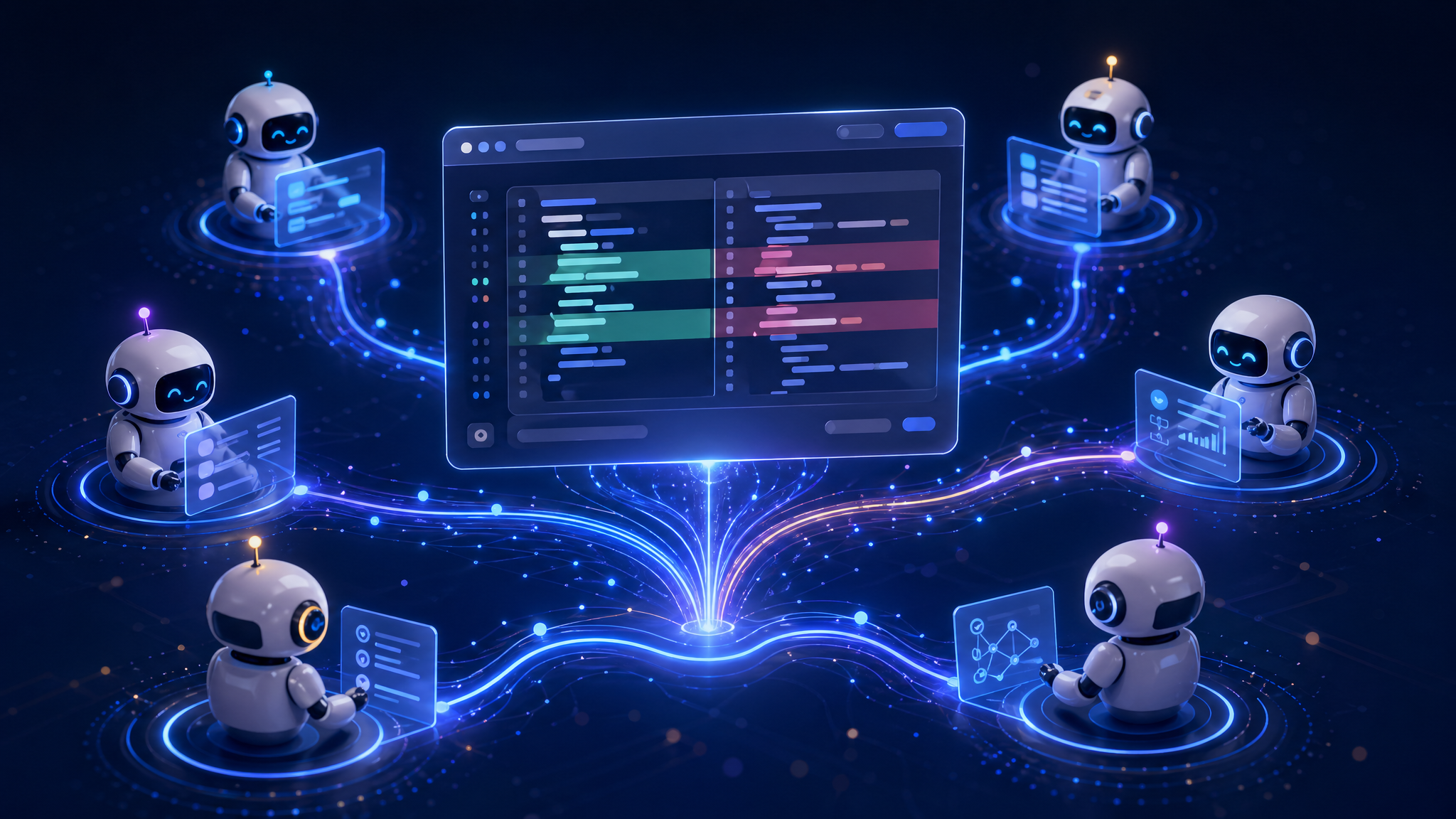
For a long time, code review has followed a pretty familiar pattern in our industry. Open a pull request, tag a few people, and wait.
A big part of that process was always about managing scarcity. Who has context? Who has time? Who is available right now? If you tag too many people, you create noise and slow things down. If you tag too few, or the wrong people, good feedback can still slip through.
Memory and Context Management: The Hardest Problem in Building with Agents
Part 2 of 5 | Series: What We Learned from the Claude Code Leak
If you have been working with agents, you know that moment when you feel the session starting to drift? You are several hours into your session. The context window fills up. The agent starts forgetting things it knew twenty minutes ago. You patch it with summaries, reintroducing requirements and guidelines. This is so painful and frustrating.
The Harness Is the Moat: Inside the Architecture Powering Autonomous Agents
Part 1 of 5 | Series: What We Learned from the Claude Code Leak
Everyone talks about the model. Which one is smarter. Which benchmark it topped. Which lab is ahead this week. Is Mythos going to change everything?
The Claude Code source leak that happened a few weeks ago tells a very interesting story. The actual API call to Claude, the part that talks to the model, is about 200 lines of code. Everything else, more than 500,000 lines, is the harness around it.
Why I Think Dreaming Is a Real Breakthrough for Agent Memory
If you have built agents that run for more than a few turns, you know where things start to break. The session gets longer. The context gets heavier. Compaction kicks in. Summaries get written. Important details get flattened. The agent may still sound coherent, but execution gets worse.
This is one of the most important problems in agent engineering right now. Consistent execution on long, complex tasks. The community has been trying to solve it with projects like mem0. More recently, even actress Milla Jovovich shared a project called MemPalace.
An Important Difference Between Anthropic and OpenAI Has Nothing to Do With Benchmarks
Two agents can be similarly capable and still feel completely different to work with.
I have spent a lot of time recently using both Anthropic and OpenAI models across writing, coding, research, and agent workflows. All of these frontier models are exceptionally good. This is not an argument that one is broadly superior to the other, or that this is the single most important difference between them.
It is just a very interesting angle, and one that I think many people perceive when they use these models heavily but rarely put into words.
Not All Agent Work Is Equal. Here’s How to Tell the Difference
One of the most useful frameworks I’ve seen lately came from one of our most AI-forward engineers, Bian Jiang, at our weekly Engineering All Hands at Attentive
He shared his approach when using AI agents and how much care one should have about the outcome from their agent interactions. I’ve been thinking about it but hadn’t articulated it as clearly as he did. Not all agent interactions are equal, and the difference between good and bad outcomes often comes down to one thing: your self-awareness about what you know and what you don’t about what you ask the agent to do.