What If Code Review Was Designed for Abundance Instead of Scarcity?
For a long time, code review has followed a pretty familiar pattern in our industry. Open a pull request, tag a few people, and wait.
A big part of that process was always about managing scarcity. Who has context? Who has time? Who is available right now? If you tag too many people, you create noise and slow things down. If you tag too few, or the wrong people, good feedback can still slip through.
That is why Anthropic’s Ultrareview caught my attention.
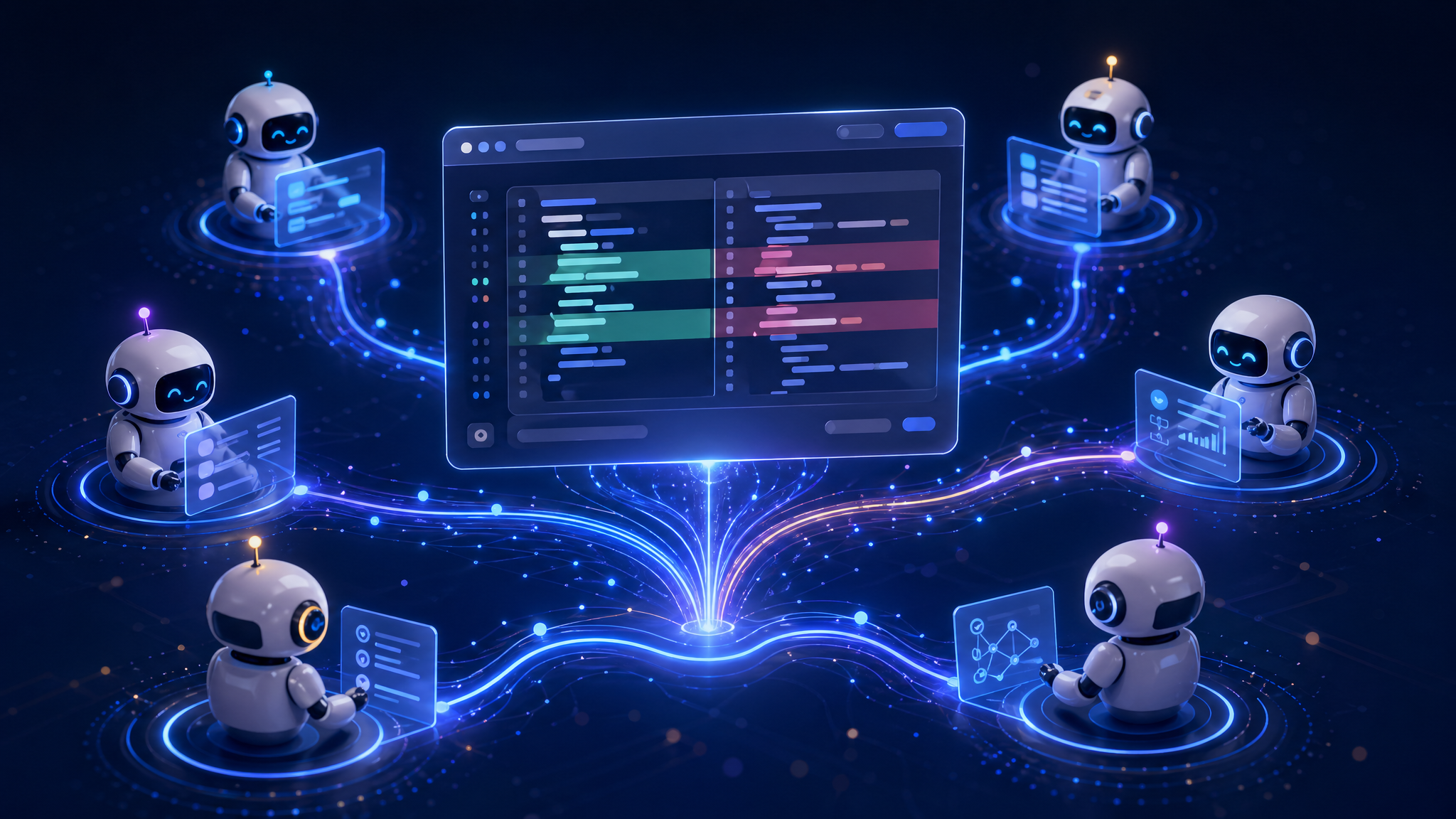
What is interesting to me is not just that it can review code faster. It changes the shape of the review problem. Based on the official documentation, Ultrareview runs a deep multi-agent review in the cloud. It launches a fleet of reviewer agents, explores changes in parallel, and verifies findings before surfacing them.
I do not see that as a replacement for human review.
I see it as a new layer of review capacity that we simply did not have before.
You still want human judgment. You still want context. You still want the right engineers involved. But now you can also run a broader and deeper review before merge, without being limited to a single pass from a small set of people.
That feels like a much bigger idea than just code review.
I think one of the mistakes we are making right now with agents is that we keep trying to fit them into workflows that were designed around human limits. Human attention is limited. Human bandwidth is limited. Human coordination is slow. A lot of our software processes were built around those constraints.
Agents give us a chance to rethink some of that.
Not by removing humans from the process, but by changing what the process can be.
Code review may be one of the clearest early examples. The old question was: who should review this? A better question might be: what kind of review do I want before this merges, and how much of that can happen in parallel?
That is a very different way to think about building software.
And it makes me wonder what else we still do this way just because that was the best version of the workflow before agents existed.